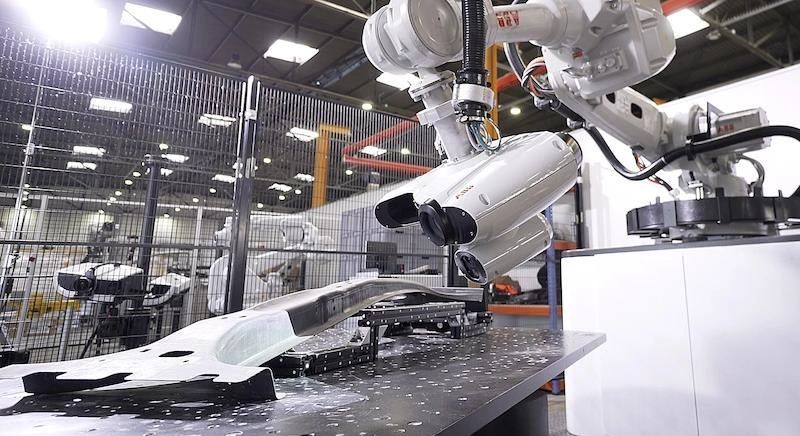
The fourth industrial revolution, or Industry 4.0, is revolutionizing manufacturing through smart technology, interconnectivity, and data-driven decision making. Let's explore how this transformation is shaping the future of industrial automation.
The Pillars of Industry 4.0
Industry 4.0 rests on several key technological pillars that are reshaping industrial automation:
- Internet of Things (IoT): Connected devices and sensors that enable real-time monitoring and control
- Artificial Intelligence: Smart systems that can learn, adapt, and make autonomous decisions
- Cloud Computing: Scalable computing resources that enable big data analytics and remote operations
- Digital Twin Technology: Virtual replicas of physical assets for simulation and optimization
"Industry 4.0 isn't just about automation – it's about creating intelligent, interconnected systems that can communicate, analyze data, and make decisions in real-time."
Impact on Manufacturing
The implementation of Industry 4.0 technologies is creating significant improvements in manufacturing operations:
Increased Efficiency
Smart factories are seeing productivity gains of 20-30% through optimized processes and predictive maintenance.
Quality Improvement
AI-powered quality control systems are reducing defect rates by up to 50% in some industries.
The Role of Data Analytics
Big data analytics is becoming increasingly crucial in industrial automation. Manufacturing facilities are now collecting and analyzing vast amounts of data to:
- Optimize production processes
- Predict equipment maintenance needs
- Improve product quality
- Reduce energy consumption

Future Trends
Looking ahead, several emerging trends will shape the future of industrial automation:
1. 5G Integration
5G networks will enable ultra-reliable, low-latency communication, making real-time control and monitoring more effective than ever.
2. Edge Computing
Processing data closer to its source will reduce latency and enable faster decision-making in critical applications.
3. Collaborative Robots
Advanced cobots will work alongside humans, combining human intelligence with machine precision and strength.
Preparing for the Future
To stay competitive in this rapidly evolving landscape, manufacturers should:
- Invest in workforce training and development
- Implement scalable automation solutions
- Focus on cybersecurity
- Develop a clear digital transformation strategy
Key Takeaways
- Industry 4.0 is transforming manufacturing through smart, connected systems
- Data analytics and AI are driving operational improvements
- Future trends include 5G, edge computing, and collaborative robotics
- Success requires a comprehensive digital transformation strategy

About the Author
Michael Zhang is the CTO of Shanghai SuperCTRL Automation Co. Ltd, with over 15 years of experience in industrial automation and control systems.